
Email Marketing for Plumbers: Step-by-Step Guide to More Leads
Email marketing for plumbers is one of the most powerful ways to generate repeat service calls, increase booked jobs, and stay top-of-mind with past customers.
While many plumbers focus solely on paid ads or word-of-mouth referrals, a strategic email approach lets you stay top-of-mind with past clients, nurture new leads, and book more jobs throughout the year. Email marketing for plumbers delivers an average ROI of $40 for every dollar spent, making it one of the highest-performing marketing channels available to your plumbing services.
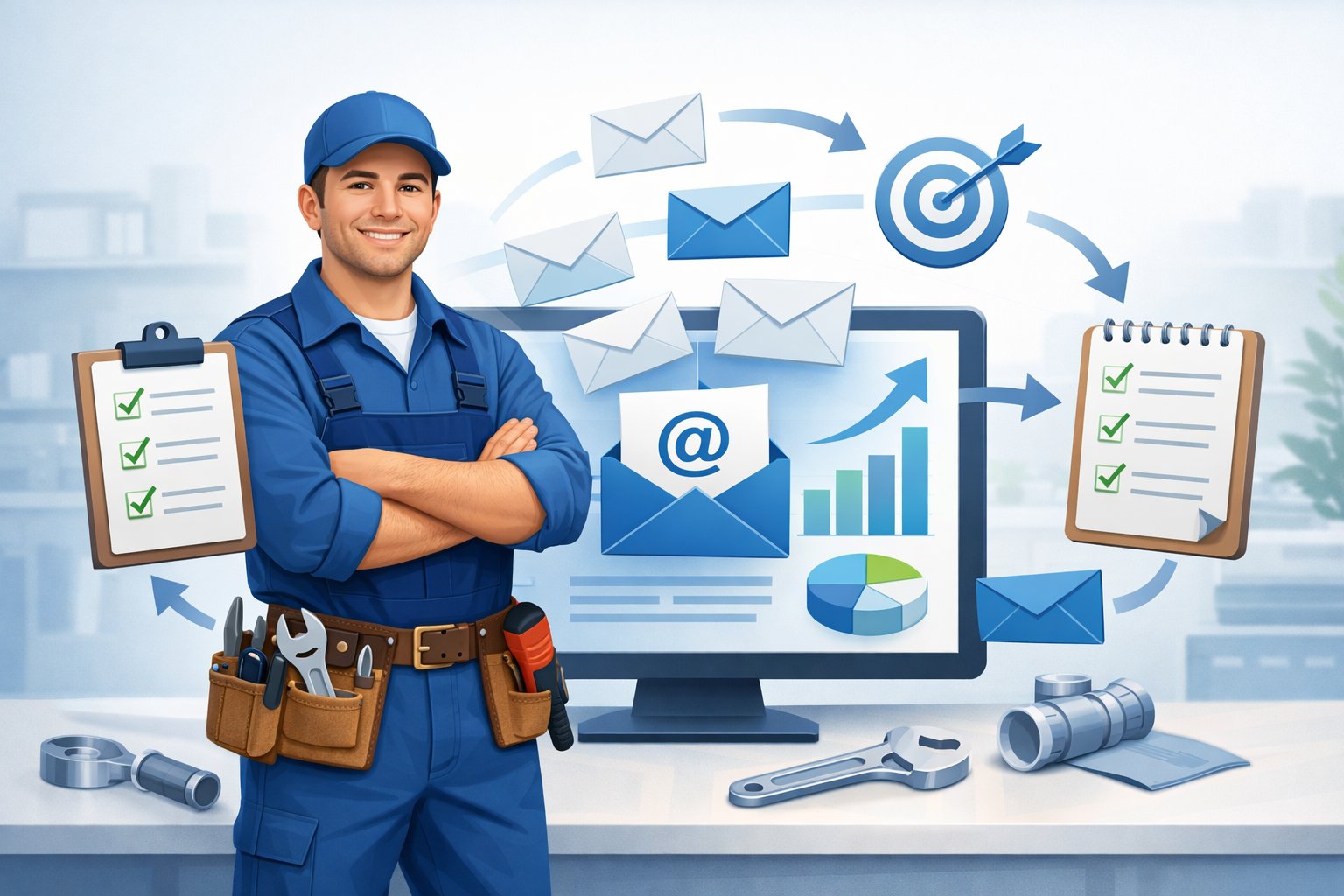
Getting started with email marketing doesn’t require technical expertise or a massive budget. You need a clear plan that includes building your contact list, creating valuable content your customers actually want to read, and automating follow-ups so you’re not manually sending every message. This guide walks you through each step of building an email marketing strategy that brings in more jobs while keeping your business connected to customers who need your services.
Whether you’re sending your first campaign or looking to improve results from existing efforts, the strategies ahead will help you craft emails that get opened, read, and acted upon. You’ll learn how to write subject lines that grab attention, design mobile-friendly messages, segment your audience for better targeting, and track performance to continuously improve your campaigns.
Key Takeaways
- Email marketing provides plumbers with a high-return channel to generate leads and maintain customer relationships at minimal cost
- Building an effective email strategy requires establishing your foundation, creating valuable content, and leveraging automation to save time
- Tracking campaign metrics and continuously optimizing based on performance data helps maximize results and avoid common mistakes
Why Email Marketing Matters for Plumbers
Email marketing delivers measurable returns for plumbing businesses through direct customer communication, lower costs than traditional advertising, and consistent touchpoints that turn one-time service calls into repeat customers.
Benefits for Plumbing Businesses
Email marketing gives you direct access to customers who already know your plumbing services. You can send maintenance reminders, seasonal tips, and service updates straight to their inbox without competing for attention on crowded social media feeds.
This channel helps you stay top-of-mind when plumbing emergencies arise. When a pipe bursts at 2 AM, customers are more likely to call the plumber whose helpful emails they’ve been reading for months.
Effective email marketing strategies for plumbers also allow you to showcase completed projects and customer testimonials. You can segment your list to send targeted messages about water heater replacements to homeowners or commercial drain cleaning to business owners.
The data you collect from email campaigns reveals what services interest your audience most. Open rates and click-through rates show which offers resonate, helping you refine your plumbing marketing approach over time.
Cost-Effectiveness Compared to Other Channels
Email marketing typically costs a fraction of what you’d spend on pay-per-click ads or direct mail campaigns. Most email platforms charge between $10 and $50 monthly for lists under 1,000 subscribers.
Compare that to $50-$200 per click for competitive plumbing keywords or $0.50-$2.00 per postcard when you factor in printing and postage. Your ROI improves dramatically when you can reach hundreds of customers for pennies per message.
You don’t need a large budget to start seeing results. A single email promoting drain cleaning before winter can generate thousands in revenue while costing less than $20 to send. Email marketing is more affordable than other digital marketing channels and delivers consistent returns without ongoing ad spend.
Building Long-Term Customer Relationships
Regular email contact transforms one-time customers into repeat customers who call you first for every plumbing need. Monthly newsletters with maintenance tips position you as a trusted advisor, not just a service provider.
You can automate follow-up emails after each job to request reviews, offer referral incentives, or remind customers about annual inspections. These touchpoints keep your business relationship active between service calls.
Birthday emails with special discounts or anniversary messages celebrating years as a customer create personal connections. When you send helpful content about preventing frozen pipes or maintaining water heaters, customers see value beyond sales pitches.
This consistent communication builds loyalty that protects you from competitors. Customers who receive your emails regularly are less likely to search for “plumber near me” when problems occur because they already have you saved in their contacts.
Setting Up Your Email Marketing Foundation
A successful email marketing campaign starts with three fundamental elements: a quality contact list, organized customer segments, and reliable software to manage your communications. These components work together to ensure your plumbing business reaches the right customers with relevant messages.
Building an Email List of Plumbing Customers
Your email list represents potential revenue, making it one of your most valuable business assets. Start collecting addresses through your website by adding opt-in forms on your homepage, service pages, and blog posts where customers search for “plumber near me” solutions.
Create a customer profile in your database each time you complete a job. Request email addresses during service calls, over the phone when booking appointments, and through invoices. Offer incentives like seasonal maintenance discounts or free plumbing inspection checklists to encourage signups.
Consider these lead generation tactics:
- Service call forms that capture contact information
- Website pop-ups offering emergency plumbing tips
- Social media promotions advertising exclusive email subscriber discounts
- Referral programs where existing customers share signup links
Never purchase email lists from platforms like Fiverr or bulk contact providers. These lists contain unqualified plumbing leads who haven’t expressed interest in your services and often result in high spam complaints that damage your sender reputation.
Segmenting Contacts for Local Service Areas
Organizing your email list by location and customer type improves response rates significantly. Create separate segments for each zip code or neighborhood you serve since customers care most about plumbers available in their immediate area.
Divide your list into these categories:
- Residential customers by service areas
- Commercial property managers by building locations
- Past customers who need follow-up maintenance
- New leads who haven’t used your services yet
Tag contacts based on the services they’ve requested (drain cleaning, water heater repair, pipe installation). This lets you send targeted campaigns about relevant seasonal offerings. For example, customers in flood-prone areas receive sump pump maintenance reminders before rainy seasons.
Choosing the Right Email Marketing Tools
Selecting email marketing software designed for small businesses makes campaign management straightforward. Look for platforms that offer contact segmentation, mobile-responsive templates, and automation features.
Key features to prioritize:
| Feature | Why It Matters |
|---|---|
| Automation workflows | Send appointment reminders and follow-ups automatically |
| Mobile optimization | 60% of emails are opened on phones |
| Template builder | Create professional emails without design skills |
| Analytics dashboard | Track open rates and clicks to measure success |
Popular options include Mailchimp, Constant Contact, and ActiveCampaign, which integrate with scheduling software and CRM systems used in digital marketing for plumbers. These tools let you manage your entire communication strategy from one dashboard while tracking which campaigns generate actual service calls.
Crafting Effective Email Campaigns for Plumbers
Successful email campaigns depend on optimized subject lines, targeted segmentation, valuable content, and strategic calls-to-action that drive customer engagement. Each element works together to improve your open rate, click-through rate, and conversion rate.
Creating Compelling Subject Lines
Your subject line determines whether recipients open your email or send it straight to trash. Keep subject lines between 30-40 characters to ensure they display fully on mobile devices.
Personalization increases open rates significantly. Include the recipient’s first name using merge tags like {FirstName} in your email templates. Add relevant emojis sparingly to catch attention in crowded inboxes.
Create urgency without being misleading. “John, your winter pipe inspection is due” performs better than generic subject lines. Test different approaches like questions, benefits, or time-sensitive offers.
Avoid spam trigger words like “free,” “guaranteed,” or excessive punctuation. Email marketing strategies for plumbers show that personalized subject lines can double engagement compared to generic alternatives.
Personalization and Customer Segmentation
Dividing your email list into specific groups allows you to send targeted messages that resonate with each recipient’s needs. Segmentation can increase click-through rates by up to 100% compared to broad email blasts.
Create segments based on:
- Service history: Past customers who used drain cleaning vs. water heater installation
- Customer lifecycle: New leads, active customers, dormant clients
- Property type: Residential homeowners, commercial properties, rental property managers
- Geographic location: Target customers in specific service areas for seasonal promotions
Send new homeowners tips about maintaining their plumbing systems. Reach out to past customers before peak seasons with maintenance reminders. Dormant clients might respond to special reactivation offers.
Your email marketing strategy should include different email templates for each segment. This approach ensures every message addresses specific pain points and interests.
Essential Content for Plumbing Emails
Your email content must provide value beyond sales pitches. Educational content builds trust and positions you as an expert in your field.
Content types that perform well:
| Content Type | Purpose | Example |
|---|---|---|
| Educational tips | Establish expertise | “5 Signs Your Water Heater Needs Replacement” |
| Seasonal reminders | Drive timely bookings | “Prepare Your Pipes for Winter” |
| Maintenance guides | Reduce service calls | “Monthly Plumbing Checklist for Homeowners” |
| Customer reviews | Build social proof | Testimonials from satisfied clients |
| Service showcases | Highlight capabilities | Before/after photos of recent projects |
Include customer reviews and testimonials in your emails. Real feedback from local homeowners increases credibility and influences purchasing decisions.
Keep your copy concise and scannable. Use short paragraphs, bullet points, and subheadings. Most readers spend only seconds reviewing promotional emails, so make your value proposition clear immediately.
Using Clear Calls-to-Action
Every email needs one primary call to action (CTA) that tells recipients exactly what to do next. Emails with a single CTA increase click-through rate by over 370% compared to emails with multiple competing actions.
Place your CTA button above the fold so readers see it without scrolling. Use action-oriented language like “Schedule Your Inspection,” “Get Your Free Quote,” or “Book Now.”
Make CTA buttons large enough to tap easily on mobile devices—at least 44×44 pixels. Use contrasting colors that stand out from your email background. Test different button colors to see what drives the highest conversion rate.
Your call to action should align with the email’s content and your recipient’s position in the customer journey. New leads might need “Learn More” while past customers respond better to “Book Your Annual Service.”
Include a text link version of your CTA near the bottom for recipients whose email clients block images. Track which CTAs perform best and refine your content marketing for plumbers approach based on real data.
Designing Emails That Convert Plumbing Leads
Effective email design combines visual appeal with functional elements that guide subscribers toward booking your services. Your emails should reflect your plumbing brand while maintaining mobile compatibility and clear calls-to-action.
Essential Design Elements for Plumbers
Your email layout needs a single, prominent call-to-action button that stands out from other content. Emails with one CTA increase click-through rates by more than 370% compared to messages with multiple competing actions. Place this button above the fold where subscribers see it immediately.
Use short paragraphs of 2-3 sentences with plenty of white space between sections. Include your business phone number at the top of every email for immediate contact. Add clickable service area badges or trust symbols like licenses and certifications near your CTA.
Professional images of your team or completed projects build credibility better than stock photos. Keep your color scheme limited to 2-3 brand colors that match your plumbing website. Include alt text for all images since some email clients block images by default.
Optimizing for Mobile Devices
Most subscribers read emails on smartphones, making mobile optimization critical for conversions. Keep subject lines under 30 characters so they display fully on mobile screens. Design emails with a single-column layout that adjusts automatically to different screen sizes.
Make your CTA buttons at least 44×44 pixels for easy tapping on touch screens. Test font sizes to ensure readability without zooming—16px minimum for body text works well. Avoid placing clickable elements too close together to prevent mis-taps.
Load times matter on mobile networks, so compress images and limit email file size to under 100KB when possible. Preview your emails on actual devices before sending to catch formatting issues that desktop views might miss.
Branding With Logos, Van Wraps, and Uniforms
Your brand identity should remain consistent across your email marketing, van wraps, and technician uniforms. Place your logo in the email header using the same version that appears on your plumbing website and service vehicles. This repetition builds recognition when customers see your branded van in their neighborhood.
Use the same color palette and fonts that appear on your uniforms and truck graphics. When subscribers recognize your brand from multiple touchpoints, they’re more likely to trust your emails and book services. Include photos of your uniformed technicians next to your branded vehicles to reinforce this connection.
Your email footer should match the contact information displayed on your van wraps. Consistent branding across platforms increases trust, with 90% of consumers more likely to purchase from brands they recognize and trust.
Automating and Scheduling Emails for Maximum Impact
Email automation handles repetitive tasks like sending appointment confirmations and seasonal maintenance alerts, freeing your team to focus on fieldwork while maintaining consistent customer communication. Strategic timing ensures your messages reach customers when they’re most likely to need your services.
Seasonal Maintenance Reminders
Automated seasonal reminders keep your business top-of-mind during critical maintenance periods throughout the year. Set up campaigns to trigger 2-3 weeks before season changes, alerting customers to preventive services like water heater flushes before winter or sump pump checks before spring storms.
Create a plumbing maintenance checklist for each season that addresses specific regional concerns. Winter emails should cover pipe insulation and outdoor faucet winterization, while spring messages focus on leak detection after freeze-thaw cycles. Fall campaigns can promote furnace humidifier servicing and outdoor spigot preparation.
Behavioral email triggers based on customer actions increase booking rates significantly. Schedule these messages to align with local weather patterns—if your area experiences harsh winters, send freeze prevention tips in early November rather than following a generic calendar.
Appointment Reminders and Confirmations
Appointment reminders reduce no-shows and improve scheduling efficiency for your plumbing business. Send an initial confirmation email immediately after booking, followed by a reminder 48 hours before the appointment with the technician’s name and expected arrival window.
Include practical details in your appointment reminders: the service address, estimated duration, and any preparation steps the customer should take. Add a direct link or phone number for easy rescheduling if needed.
A final reminder via email 2-4 hours before arrival keeps your appointment fresh in the customer’s mind. This three-touch sequence typically cuts no-shows by 30-35% compared to single reminders, ensuring your technicians arrive to ready customers and maximizing billable hours.
Nurturing Repeat Customers
Repeat customers generate the most profitable revenue for plumbing businesses, and automated drip campaigns for post-service follow-ups transform one-time fixes into long-term relationships. Schedule a thank-you email 24 hours after service completion, followed by a feedback request at the 3-day mark.
Set up maintenance reminders based on service history—if you installed a water heater, schedule an annual flush reminder 11 months later. For drain cleaning customers, send quarterly tips on maintaining clear pipes with a booking link for preventive service.
Create exclusive offers for repeat customers, such as priority scheduling or maintenance package discounts. Segment your list by service type to send relevant promotions: tankless water heater customers receive different content than those with traditional units. This personalization increases engagement rates and encourages customers to book preventive services rather than waiting for emergencies.
Integrating Email With Broader Plumbing Marketing Strategy
Email campaigns deliver the best results when paired with other marketing channels that build trust and visibility. Your email marketing efforts should align with SEO, local search optimization, and offline tactics to create a cohesive customer experience.
Combining Email With Local SEO and Google Reviews
Your email campaigns become more effective when recipients already recognize your brand from search results and Google Business Profile listings. Local SEO for plumbers establishes visibility in your service area, making people more likely to open emails from your company.
Send targeted emails requesting Google reviews immediately after completing a service call. This timing catches customers when they’re most satisfied with your work. Your Google Business Profile benefits from fresh reviews, which improve your rankings in local search and Google Local Service Ads.
Include links to your Google My Business profile in email signatures and promotional messages. When customers see consistent 5-star ratings across multiple touchpoints, they develop stronger trust in your services. This cross-channel reinforcement turns casual subscribers into paying customers faster than email alone.
Leveraging Content Marketing and Social Proof
Share helpful plumbing tips and maintenance advice through your email newsletters that demonstrate your expertise. This content marketing approach positions you as a knowledgeable resource rather than just another service provider.
Feature customer testimonials and case studies in your emails to provide social proof. Include before-and-after photos of completed jobs, video testimonials, or detailed reviews from satisfied clients. Real examples from local homeowners carry more weight than generic promotional messages.
Repurpose your best-performing blog content into email campaigns. If you’ve written guides about preventing frozen pipes or detecting water leaks, summarize key points in emails with links to full articles on your website.
Using Direct Mail and Door Hangers Together
Combine your email list building with offline tactics like door hangers and direct mail marketing in target neighborhoods. Leave door hangers with QR codes that lead to an email signup form offering a first-time customer discount.
Send direct mail postcards to neighborhoods where you’ve recently completed work, then follow up with email campaigns to the same zip codes. This multi-touch approach increases brand recognition and response rates.
Use physical mailers to reactivate cold email subscribers who haven’t engaged in 90+ days. A postcard reminder can prompt them to check their inbox for your digital offers. Track which neighborhoods respond best to coordinate future email and direct mail drops in those areas.
Tracking Results and Optimizing Performance
Measuring campaign performance reveals which tactics drive appointments and revenue for your plumbing business. By monitoring specific metrics and testing different approaches, you can refine your digital marketing for plumbers to achieve better results with each send.
Key Metrics: Open Rate, Click-Through Rate, Conversion Rate
Open rate measures the percentage of recipients who open your emails. Industry benchmarks for service businesses typically range from 20-25%, though this varies by audience. Your subject line quality and sender reputation directly impact this metric.
Click-through rate (CTR) tracks how many people click links within your emails. A CTR of 2-5% indicates solid engagement. Monitor which calls-to-action generate the most clicks, whether that’s “Schedule Now” buttons or links to specific service pages.
Conversion rate is your most critical metric. It measures how many email recipients complete your desired action, such as booking a drain cleaning or requesting a quote. Even a 1-2% conversion rate can generate significant revenue for plumbing services.
Track these metrics for every campaign:
- Total opens and unique opens
- Total clicks and unique clicks
- Bounce rates (keep under 2%)
- Unsubscribe rates (keep under 0.5%)
- Revenue generated per email
A/B Testing Email Content and Designs
Testing different email elements helps you identify what resonates with your subscribers. Send two versions of the same email to small segments before sending the winner to your full list.
Test these elements one at a time:
- Subject lines: Questions vs. statements, urgency vs. curiosity
- Send times: Tuesday morning vs. Thursday afternoon
- Call-to-action placement: Top of email vs. bottom
- Images: Before/after photos vs. team photos
- Offer types: Percentage discounts vs. dollar-amount savings
Split your test group evenly and measure for at least 24 hours before declaring a winner. Document your findings to inform future campaigns. Over time, you’ll build a clear picture of what drives action from your specific audience.
Improving ROI Over Time
Email marketing typically delivers a strong ROI for service businesses, with every dollar spent potentially generating $30-40 in revenue. Calculate your ROI by dividing revenue from email campaigns by your total email marketing costs, including software and time invested.
Segment your list based on customer behavior to increase ROI. Send maintenance reminders to past customers, emergency service offers to homeowners, and commercial service information to business subscribers. These targeted campaigns convert better than generic broadcasts.
Review your metrics monthly to identify trends in your marketing strategy for plumbers. If open rates decline, refresh your subject line approach. If CTR drops, test more compelling calls-to-action or simplify your email design. Small improvements compound over time, turning your email list into a reliable source of booked appointments.
Advanced Tips and Common Pitfalls in Plumbing Email Marketing
Successful email campaigns require legal compliance, proper technical setup, and tailored messaging for different service types. Understanding these elements helps you avoid deliverability issues while maximizing engagement with your plumbing customers.
Staying Compliant With Email Regulations
You must follow the CAN-SPAM Act requirements for all commercial emails sent to U.S. recipients. This means including your physical business address in every email footer and providing a clear, functional unsubscribe link that processes opt-out requests within 10 business days.
Never purchase email lists or add contacts without their explicit permission. Each subscriber should have willingly provided their email address through your website form, service appointment, or in-person interaction.
Key compliance requirements include:
- Clear identification of your plumbing business as the sender
- Accurate subject lines that reflect the email content
- Honor opt-out requests promptly
- Include your business mailing address
Using https secure links in your emails protects customer data and builds trust. Violating these regulations can result in fines up to $51,744 per email, making compliance non-negotiable for your plumbing business.
Avoiding Spam Filters
Your emails need proper authentication protocols to reach customer inboxes instead of spam folders. Set up SPF, DKIM, and DMARC records through your email service provider to verify your sending domain.
Avoid spam trigger words like “free,” “guaranteed,” “act now,” or excessive exclamation points in subject lines. Keep your text-to-image ratio balanced, as emails with only images often get flagged.
Clean your email list regularly by removing inactive subscribers and invalid addresses. High bounce rates signal to email providers that you’re sending unwanted messages, which damages your sender reputation.
Maintaining deliverability rates requires removing disengaged subscribers at least monthly, as over 15% of emails typically prove undeliverable. Test your emails before sending by using spam checker tools and sending test messages to multiple email providers like Gmail, Outlook, and Yahoo.
Adapting Strategies for Emergency Plumbing Services
Emergency plumbing requires different email approaches than routine maintenance campaigns. Create a separate segment for customers who have previously used emergency services, as they’re more likely to need urgent help again.
Time-sensitive emails for an emergency plumber should emphasize 24/7 availability and fast response times in the subject line. Use mobile-optimized templates since customers searching for an emergency plumber near me typically use smartphones during crisis situations.
Set up automated email sequences that trigger after emergency service calls. Send a follow-up email within 24 hours thanking the customer, then another email a week later requesting a review. Include your emergency contact number prominently in all email templates.
Emergency email elements:
- Click-to-call phone numbers
- After-hours availability details
- Average response time statistics
- Previous emergency service testimonials
Consider seasonal emergency campaigns before winter freeze periods or heavy rain seasons when plumbing emergencies spike in your service area.
Frequently Asked Questions
Plumbing businesses often face similar challenges when implementing email campaigns, from determining how often to send messages to understanding which performance indicators matter most. These practical answers address the most common concerns about building effective email strategies for plumbing services.
How can I segment my customer list for more effective email campaigns?
You can segment your email list based on service history, customer type, and geographic location. Residential homeowners who need routine maintenance require different messaging than commercial property managers dealing with emergency repairs.
Past service interactions provide valuable segmentation opportunities. Customers who recently had water heater installations shouldn’t receive promotions for new water heaters, but they might appreciate maintenance reminders or upgrades to smart home plumbing technology.
Effective email segmentation for plumbing businesses also includes separating new leads from existing customers. New prospects need educational content that builds trust, while loyal customers respond better to exclusive offers and referral incentives.
You should consider seasonal factors when creating segments. Homeowners in areas with cold winters need different services than those in warmer climates, and your email content should reflect these regional differences.
What are the most successful types of email content for plumbing services?
Educational content that helps customers maintain their plumbing systems performs consistently well. Tips for preventing frozen pipes, recognizing early signs of water damage, or maintaining garbage disposals provide genuine value that keeps subscribers engaged.
Before-and-after project showcases demonstrate your expertise while inspiring customers to consider upgrades. Photos of bathroom remodels, replaced fixtures, or resolved emergency situations build credibility and generate interest in similar services.
Seasonal maintenance reminders drive significant engagement and bookings. Your emails can prompt customers to schedule water heater flushes, sump pump inspections, or winterization services at appropriate times throughout the year.
Limited-time promotions create urgency when combined with valuable offers. Discounts on specific services, free inspections, or bundled maintenance packages encourage recipients to take immediate action.
Customer testimonials and reviews in email format strengthen trust. Real stories from satisfied clients provide social proof that influences potential customers considering your services.
What is the best frequency for sending promotional emails to my plumbing clients?
Sending one to two emails per month maintains consistent communication without overwhelming your subscribers. This frequency keeps your plumbing business visible while respecting your customers’ inbox space.
Your email frequency should align with customer needs and seasonal demands. You might increase sending during peak seasons when plumbing issues are more common, such as before winter or during spring when maintenance is top of mind.
Existing customers typically tolerate more frequent communication than new leads. Loyal clients who have used your services multiple times often appreciate regular updates, while prospects need time between messages to avoid feeling pressured.
You should monitor unsubscribe rates and engagement metrics to find your optimal frequency. A sudden increase in unsubscribes or declining open rates indicates you’re sending too many emails.
Which metrics should I track to measure the success of my email marketing efforts?
Open rates reveal how effective your subject lines are at capturing attention. Industry averages for service businesses typically range from 15% to 25%, though rates vary based on your list quality and audience engagement.
Click-through rates measure how many recipients take action on your email content. This metric indicates whether your message resonates with readers and whether your calls-to-action are compelling enough to drive engagement.
Conversion rates track how many email recipients complete desired actions like booking appointments or requesting quotes. Monitoring and analyzing email marketing results provides insights into which campaigns generate actual business revenue.
Your unsubscribe rate signals content relevance and frequency appropriateness. While some attrition is normal, consistently high unsubscribe rates indicate problems with your messaging or sending schedule.
Revenue attribution connects email campaigns directly to income. Tracking which emails lead to booked jobs helps you calculate return on investment and identify your most valuable email types.
How can I write compelling subject lines that will increase my email open rates?
Personalization in subject lines significantly improves open rates. Including the recipient’s name or referencing their specific location makes emails feel more relevant and less like mass marketing.
You should create urgency without resorting to spam tactics. Subject lines like “Schedule Your Fall Plumbing Inspection Before October 31st” provide clear deadlines while offering genuine value.
Questions in subject lines spark curiosity and engagement. “Is Your Water Heater Ready for Winter?” prompts recipients to open the email to find the answer.
Numbers and specifics make subject lines more concrete and trustworthy. “5 Signs You Need Emergency Drain Cleaning” or “Save $75 on Water Heater Maintenance This Month” tell readers exactly what to expect.
Keep your subject lines between 40-60 characters for optimal mobile display. Most people check email on smartphones, and longer subject lines get cut off on smaller screens.
What are some key strategies for converting email leads into paying customers for my plumbing business?
Clear calls-to-action guide recipients toward booking services. Your emails should make it simple to schedule appointments through prominent buttons or links that direct customers to online booking systems or phone numbers.
Multiple touchpoints through automated email sequences nurture leads over time. A series of educational emails builds trust before presenting offers, which improves conversion rates compared to immediate sales pitches.
You should create dedicated landing pages for email campaigns. When recipients click through, they should arrive at pages specifically designed to support the email’s message with consistent branding and clear next steps.
Social proof in your emails reduces hesitation. Including customer reviews, ratings, or the number of satisfied clients you’ve served reassures prospects about choosing your services.
Limited-time offers create urgency that motivates action. When combined with genuine value, time-sensitive discounts or bonuses encourage leads to commit rather than postpone their decision.
Follow-up emails to non-responders can recover lost opportunities. A gentle reminder to leads who opened but didn’t act often captures customers who were interested but needed another prompt.